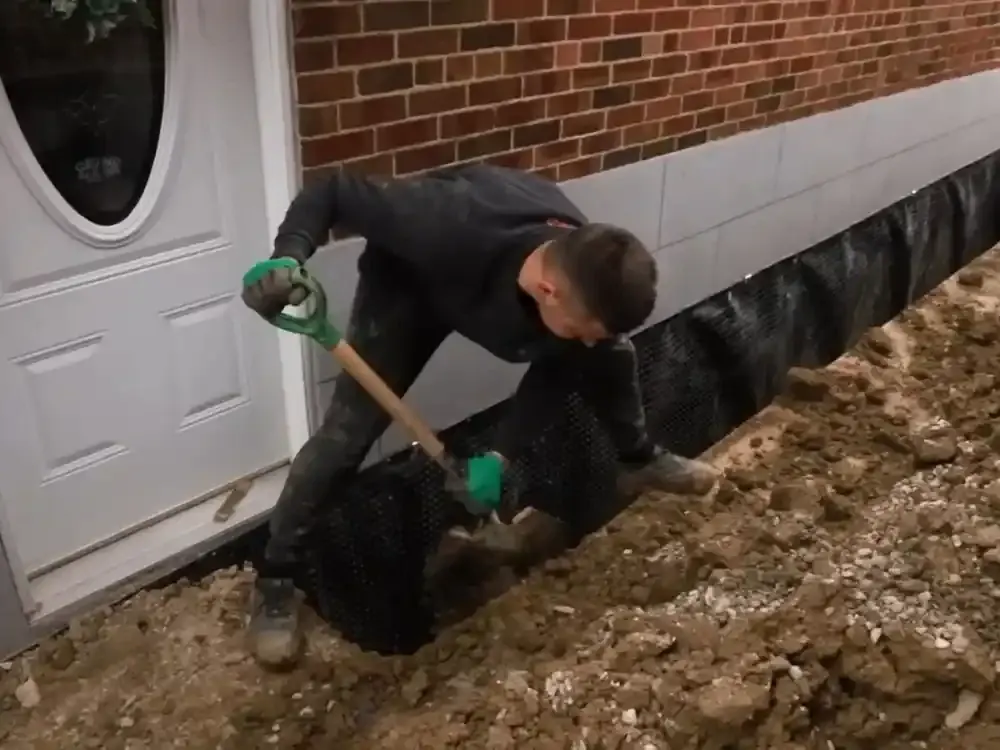
What an exterior membrane does
Water pressing against a foundation finds small cracks, mortar joints and the seam where the wall meets the floor. An exterior system treats the outside face of the wall with a waterproof coating or a membrane, usually adds a drainage board and carries water down to a drain at the footing.
The aim is to stop water before it enters the wall. Interior systems do the opposite: they accept that some water gets in and manage it with drains and a pump.
The steps of an exterior job
- Locate underground utilities by calling 811, then excavate down to the footing along the wall.
- Clean the wall, repair cracks and holes and apply a coating or membrane.
- Install a drainage board to move water down the wall.
- Place or clean a footing drain that leads to daylight or a pump.
- Backfill with proper material and regrade the surface so water runs away from the house.
Because it requires digging along the wall, the work disturbs plantings, patios, steps and sometimes utility lines. Where a porch or an attached neighbor stands next to the wall, access can be difficult or impossible.
Exterior and interior compared
| Exterior membrane | Interior drain and sump | |
|---|---|---|
| Where it works | Outside the wall | Inside along the floor edge |
| Disruption | Digging, landscaping, access | Cutting and patching the floor |
| What it does | Keeps water off the wall | Collects water that gets in |
| Works in attached rows | Often impractical | Usually possible |
| Who typically does it | Excavation and waterproofing specialists | Plumbers and waterproofing contractors |
We are a plumbing company. We handle interior drains, sump pits, pumps and discharge lines, and we say so clearly. Exterior excavation and membrane work belongs to waterproofing and excavation specialists, and we tell you when that is the better route. Our basement waterproofing page explains where plumbing fits.
Fix the cheap causes first
- Extend downspouts so roof water lands several feet from the wall.
- Clean gutters and check that they are not overflowing at the corners.
- Grade soil to slope away from the foundation.
- Seal obvious cracks and fix a leaking hose bib or underground line.
Many wet basements improve after gutters and grading are corrected. If water appears even when it has not rained, a pipe leak may be the cause, and leak detection can rule it in or out before you spend on excavation.
Why timing and weather matter
Exterior work is done when the soil is workable, so it is usually planned for spring through fall. A crew that opens a trench in a wet season has to manage water in the hole, and a trench left open before a storm can fill and undermine the wall. Ask how the contractor will protect the excavation and how long it will stay open.
Backfill also matters. Heavy clay packed tightly against a wall can hold water, while clean stone near the wall lets it drain. The surface grade at the end of the job should slope away from the house, and the downspouts should discharge well clear of the new work. Those finishing details decide whether the system stays dry for years.
Wet Basement?
Tell us when and where water appears. Our 24/7 line is open now.
Creeks, permits and contractors around Upper Darby
Cobbs Creek runs along Upper Darby Township's eastern border, and Darby Creek runs through the surrounding area. Storms can raise groundwater, but we do not claim any particular street floods, because that depends on the lot.
Upper Darby Township has adopted the Pennsylvania Uniform Construction Code and requires permits for residential alterations and repairs. Permit rules vary by job, so ask the township Department of Licenses and Inspection what applies to yours.
Pennsylvania also requires contractors who do at least $5,000 a year in home improvement work to register with the Attorney General. You can look a contractor up at hicsearch.attorneygeneral.gov. Registration is not an endorsement, but it is a fair first check.
Older stone and block foundations
Many older homes near Upper Darby have stone or block foundations, which let moisture through more readily than modern poured concrete. An exterior membrane on a stone wall needs a mason's attention to the joints first. A structural engineer should look at any wall that is bowing, leaning or showing a growing crack.
We serve Lansdowne and Yeadon close to Upper Darby, and you can read about them on our Lansdowne plumber and Yeadon plumber pages.
What to ask a contractor
- What is causing the water, and how did you find that out?
- Does the system include a footing drain and where does it discharge?
- How will you protect the wall, utilities and landscaping?
- What does the warranty cover, and is it transferable?
- Will you get the permits, and from whom?
If the plan includes a pump or an interior drain, our sump pump installation and repair page explains how we size and test them.
Warning signs to avoid
Be careful of any contractor who recommends a full exterior system without finding the cause, who refuses to put the scope in writing or who pressures you to sign the same day. A reliable one explains the options, including doing less.
Sources: according to the Pennsylvania One Call system, you must call 811 before any excavation, and a structural engineer should assess walls that bow or crack.
Questions Upper Darby homeowners ask
They do different jobs. Exterior keeps water off the wall, and interior manages water that gets in. The right choice depends on access, the wall and the cause.
No. We handle the plumbing side, including interior drains, sump pits, pumps and discharge. For exterior excavation we suggest a specialist.
Some parts of the work may need one. Ask the Department of Licenses and Inspection about the scope you plan.