Start with the symptom you actually have
Most people do not call about a leak. They call because the water bill jumped, a stain appeared on a ceiling, the floor feels warm, or the meter keeps turning with every fixture off. The method we choose depends on that first symptom, so we start there on the phone.
Meter still running
Water is moving somewhere with every fixture off. The leak may be inside or between the meter and the house.
High water bill
A slow leak or a running toilet can add up over weeks before anything shows.
Wet ceiling or wall
Water travels along framing and appears far from its source.
Warm floor or low pressure
A hot water line leaking under a floor can heat the surface above it.
Meter still running, or a high water bill
The first test is simple. Turn off every fixture and appliance, then watch the meter dial or leak indicator. If it moves, water is leaving the system. Close the main shutoff in the house and look again. If the meter stops, the leak is inside the house. If it keeps moving, the leak is outside, between the meter and the house shutoff.
That split matters because it sends the job in two directions. An inside leak is found with pressure testing, acoustic listening and thermal imaging. An outside leak on the service line is a water service line problem, which often involves excavation, and we cover it on its own page.
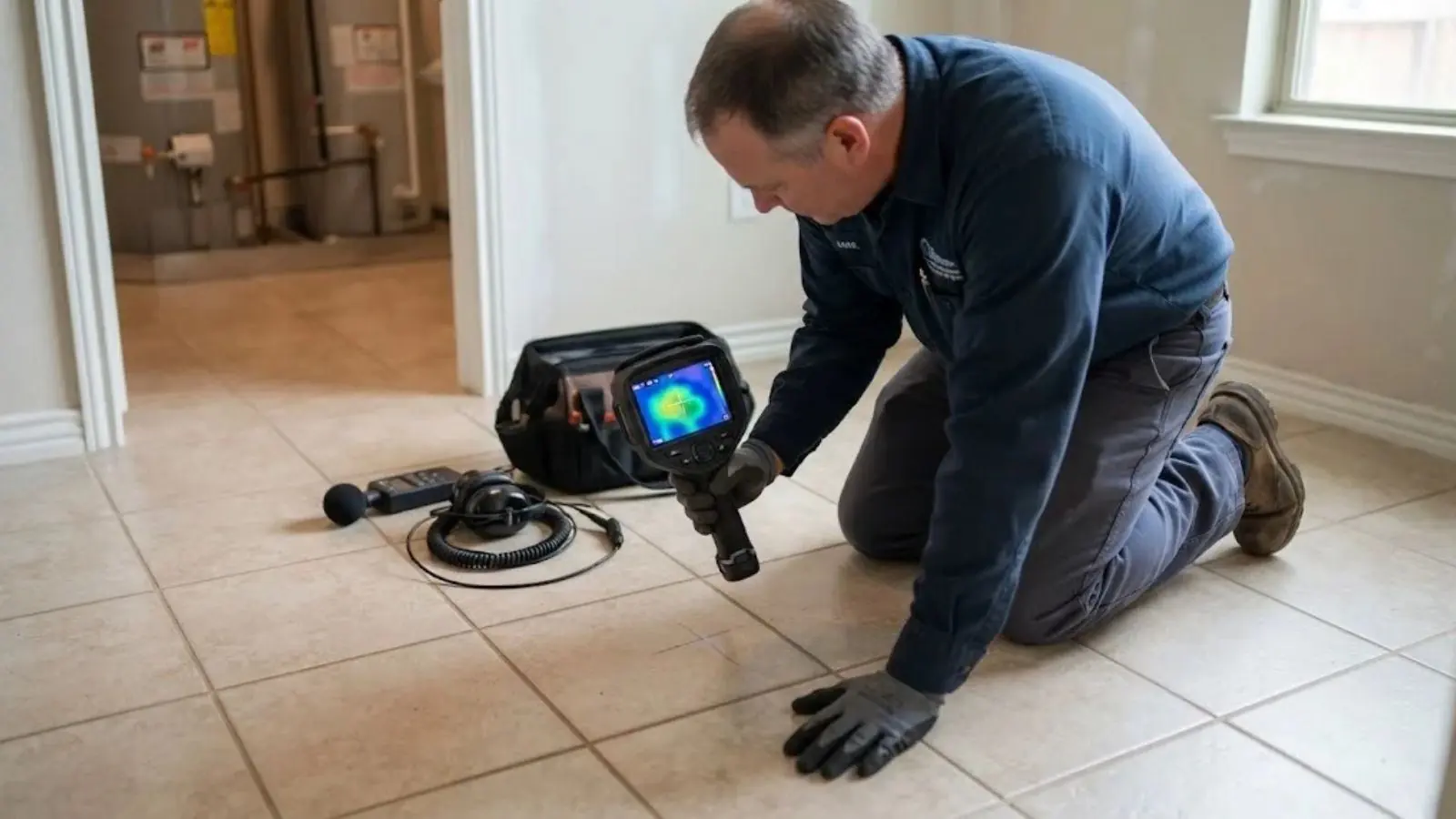
How we find a hidden leak without opening walls
- Pressure testing isolates sections of the supply system to see which one loses pressure.
- Acoustic listening picks up the sound of escaping water through pipes and concrete.
- Thermal imaging shows temperature differences from hot water leaks and wet materials.
- Moisture meters confirm what is wet and how far it extends.
- Tracer gas and camera work help for drain-side or buried leaks.
Many people ask whether we own the equipment to see a leak inside a wall or under a floor. Yes, and we explain what each tool shows before we use it, so you know whether the answer is a pinpoint, a zone or a probable area.
| Where water shows | Common source | First tool |
|---|---|---|
| Stain on a ceiling below a bathroom | Supply, drain or shower pan above | Moisture meter, thermal imaging |
| Wet baseboard on an outside wall | Hose bib, window or supply line | Moisture meter, pressure test |
| Damp basement wall or floor | Supply line, drain or groundwater | Pressure test, then source isolation |
| Wet spot in the yard | Service line, irrigation or sewer lateral | Acoustic listening, camera |
| Warm spot on the floor | Hot water line under a slab or subfloor | Thermal imaging, acoustic |
Meter running or ceiling dripping?
Close the main if you can find it, then call the 24/7 line. We will walk you through the first steps.
Slab and under-house leaks
Homes with a concrete slab, or a crawlspace under part of the house, hide supply lines where nobody looks. A warm patch of floor, a hissing sound at night or a sudden drop in pressure suggests a leak in a line below the floor. Acoustic listening and thermal imaging often find it to within a small area, and the repair options are a reroute through the ceiling, a spot repair, or a replacement of the run.
We handle these calls too, and we explain the options on the phone before anyone opens a floor.
Ceiling, wall and attic leaks
Water in a ceiling or wall rarely lies directly below its source. It runs along a joist or a pipe and drops where the framing ends. We trace it upward by moisture readings, check the supply and drain runs above, and test the fixtures one at a time. If the water comes from a bath or shower above, a failed valve, a worn drain seal or a cracked supply line is the usual cause, and the faucet repair page covers valve work.
Underground and yard leaks, plus irrigation
A wet patch in the lawn, a soft spot near the foundation or a drop in water pressure can point to a buried line. Underground, water follows the path of least resistance, so the wet spot is not always above the break. We locate by listening along the line and by shutting down branches, including an irrigation line, to see which section is losing water.
Pool and spa plumbing can leak too. We handle the supply and return plumbing, but not liner or structural leak repair.
Commercial leak detection
Shops, restaurants and landlords with older mixed-use buildings around Terminal Square and Garrett Road need leak tracing without long shutdowns. The method is the same, and the commercial plumbing page explains scope and access for businesses and property managers.
A simple home test before you call
- Turn off every faucet and appliance that uses water, including the ice maker and the washer.
- Read the meter or watch the leak indicator, a small triangle or dial that spins when water moves.
- Wait fifteen minutes without using any water and read it again.
- If it moved, close the main valve inside the house and look again. If it stops, the leak is on your side of the valve.
- If the meter keeps moving with the main closed, the leak is between the meter and the valve, and you should call both us and your water utility.
Toilets are the most common quiet culprit. Put a few drops of food coloring in the tank and wait twenty minutes without flushing. Color in the bowl means the flapper is leaking, which is a small repair and a large waste of water. See toilet repair for the fix.
What a report should include
A useful leak detection visit ends with something you can act on, not a vague guess. You should get where the leak is, how we know, what is damaged and what the repair involves. We give you the readings and the location in plain terms, and we mark the spot so the next person can find it. If the pipe is in a wall, we explain how large an opening the repair needs.
For water damage already inside the house, photograph it and call your insurer. Sudden leaks are often covered, while slow ones frequently are not, which makes early detection worth more than it looks. If the leak turns out to be a burst or a split, burst pipe repair covers the next step.
What leak detection costs
We give you the price for the investigation before we begin, and the repair is quoted separately once the leak is found.
Insurance often covers the damage a hidden leak causes and sometimes the cost of tracing it, but rarely the pipe repair itself. Check your policy. Want your real number? Call (215) 714-6692.
Serving the whole township and the neighbors
We handle leak calls across Upper Darby ZIP 19082 and Drexel Hill 19026, and the same approach works for older homes in nearby boroughs. See our Darby plumber page for how we cover the boroughs along Darby Creek.
Sources: a suspected leak between the meter and the street belongs to your water utility, and plumbing contractors in the township must employ a licensed master plumber under Upper Darby Township Code Chapter 265. Work is judged against the International Plumbing Code (IPC) used under the state code.
Questions homeowners ask
Yes. If water is coming through a ceiling or the meter is racing, call the 24/7 line. We will tell you what to shut off and book the first available technician.
Turn off every fixture and appliance, then watch your water meter. If the dial or leak indicator moves, water is escaping. Close the main shutoff in the house and look again to see whether the leak is inside or outside.
We try not to. Acoustic, thermal and pressure methods usually narrow the location before any opening is needed, and we tell you the smallest opening that will do the job.
Often, yes. We listen along the line and isolate branches to narrow the area, then explain the repair options.
Yes, and it is one of the most common causes of a high bill. A toilet that runs or refills on its own can waste gallons a day, and the fix is usually a flapper or fill valve.