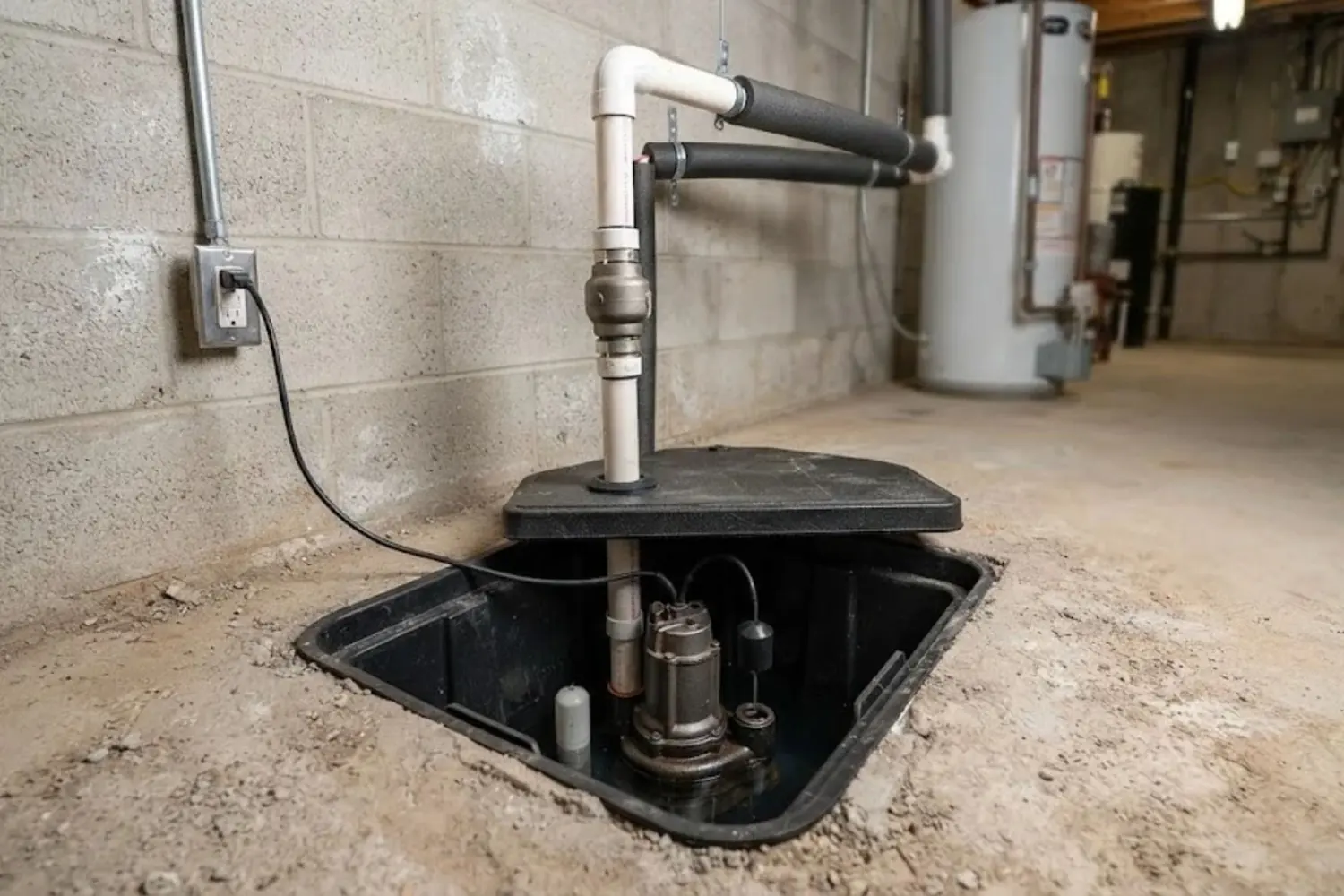
What a sump pump does
A sump pump sits in a pit in the basement floor. When groundwater fills the pit, a float switch turns the pump on and it sends water out through a discharge pipe. When the pump fails, the pit overflows and the basement floods.
Creeks run along the borders of several of the towns we serve, including Cobbs Creek and Darby Creek, and heavy storms can raise groundwater and fill basements across the area. We are careful not to claim that your particular street floods, because that depends on the lot, and we ask you about your history instead.
Why sump pumps fail
Float stuck or tangled
The switch will not rise, so the pump never starts, or it never turns off.
Power outage
Storms often knock out power exactly when the pump is needed.
Clogged intake or check valve
Silt and debris restrict flow, and a failed check valve lets water run back.
Worn motor
Pumps wear out, and a pump that runs constantly may be struggling.
A pump that hums but pumps no water, one that cycles every few seconds or one that makes grinding noises is telling you something. We test the float, the pump and the discharge line before we replace anything.
| Symptom | Likely cause | Fix |
|---|---|---|
| Pump will not start | Stuck float or no power | Free float, check the outlet and breaker |
| Runs constantly | Float stuck on or high water table | Reset float, check the check valve |
| Hums but no water | Clogged intake or failed impeller | Clean or replace pump |
| Cycles on and off quickly | Failed check valve or small pit | Replace valve, review pit size |
| Loud noise | Worn bearings | Replace pump |
Water rising in the pit?
Call the 24/7 line. We will tell you what to check while a plumber is on the way.
Replacing and installing a sump pump
A pump that is ten years old or more is a replacement candidate, particularly if it is the only line of defense. We install submersible pumps in a clean pit, with a new check valve and a discharge line that carries water away from the foundation. The discharge must go somewhere appropriate, and local rules apply to where it can drain. We explain what to avoid.
If you have no pit and your basement takes in water, installation starts with a look at the cause. The basement waterproofing page covers how drainage and pump systems work together.
Battery backup systems
A battery backup pump runs when the power fails. It does not replace the main pump, but it keeps water out during the outage that often comes with a storm. We install and test backup systems and explain how long they run and what maintenance the battery needs.
Testing your pump before the storm
- Pour a bucket of water into the pit until the float rises.
- Watch for the pump to start and empty the pit.
- Check that water is leaving through the discharge pipe outside.
- Listen for unusual noises and look for debris in the pit.
If water is coming in because of a leak rather than groundwater, a leak detection visit finds out whether a pipe is involved. Sump water should not go into the sewer, and we explain the local rule on that.
Keeping a pump ready between storms
A pump that sits unused for months can stick. Test it every season by pouring water into the pit until the float lifts, and listen for a smooth start and a clean stop. Clean the pit of silt and debris, check that the discharge pipe is clear and keep the outlet free of leaves. These ten minutes cost nothing and catch most problems before they matter.
What sump pump work costs
We give you a price before replacement work starts.
Standard homeowners policies often exclude groundwater flooding unless you have added coverage for sump pump failure or water backup. Check your policy. Want your real number? Call (215) 714-6692.
Sources: ask the township where sump discharge may go, because stormwater should not enter the sanitary sewer, and Upper Darby Township Code Chapter 265 covers the plumbing contractor. Behind the permit rules sits the International Plumbing Code (IPC), adopted statewide.
Questions homeowners ask
Yes. The 24/7 line takes sump pump calls during storms, and we ask about the water level so we can prioritize.
It varies with use and quality. Pumps that run a lot may wear sooner. If yours is old or noisy, we test it and tell you honestly.
If your basement floods when the pump stops and storms cause power cuts, a backup is a reasonable protection. We explain run time and maintenance.
Away from the foundation and not into the sanitary sewer. Local rules apply, and we explain what to do for your property.