Signs the supply pipes are failing
Low pressure at several fixtures
Galvanized pipe corrodes inside and narrows over decades.
Rusty or brown water
Interior corrosion flakes into the water, especially after it sits.
Repeat pinhole leaks
More than one leak in a short time suggests the whole run is aging.
Noisy or banging pipes
Old, loose or narrowed pipes can rattle and knock.
One leak in a good pipe is a repair. Several leaks in the same type of pipe within a few years is a pattern, and each repair takes a section of old pipe and connects it to more old pipe. That is when a repipe starts to make sense.
Galvanized steel and older pipe materials
Galvanized steel pipe, coated with zinc, was common in homes built in the first half of the twentieth century. The zinc wears, the steel rusts and the pipe fills with scale from inside. Flow drops, and the pipe becomes brittle at threaded joints. Water that looks clear in the morning and rusty after sitting overnight is a classic sign.
Copper lasts much longer but can develop pinholes, especially where the water chemistry or installation was poor. Some plastic pipe systems from certain eras have known failure issues. We identify what is in your house before suggesting anything.
Repipe, partial repipe or repair
| Situation | Better option | Why |
|---|---|---|
| One leak in good copper | Repair | The rest of the pipe is sound |
| Galvanized pipe with low pressure everywhere | Full repipe | Scale restricts the whole system |
| One failing run, rest fine | Partial repipe | Replace only the bad section |
| Pinholes in copper at several places | Evaluate, often repipe | A pattern points to the pipe, not one fitting |
| Leak in a wall that cannot be reached | Reroute | New path avoids opening the wall |
Low pressure or rusty water?
Call and we will explain whether it points to a repipe or a smaller fix.
What a repipe involves in an occupied home
- 1
Survey
We trace the supply lines, check access and decide the route.
- 2
Plan
You get a written scope, schedule and what will be opened.
- 3
Install
New supply lines go in with the water off for a limited time each day.
- 4
Restore
We test, patch access holes as agreed and turn the water back on.
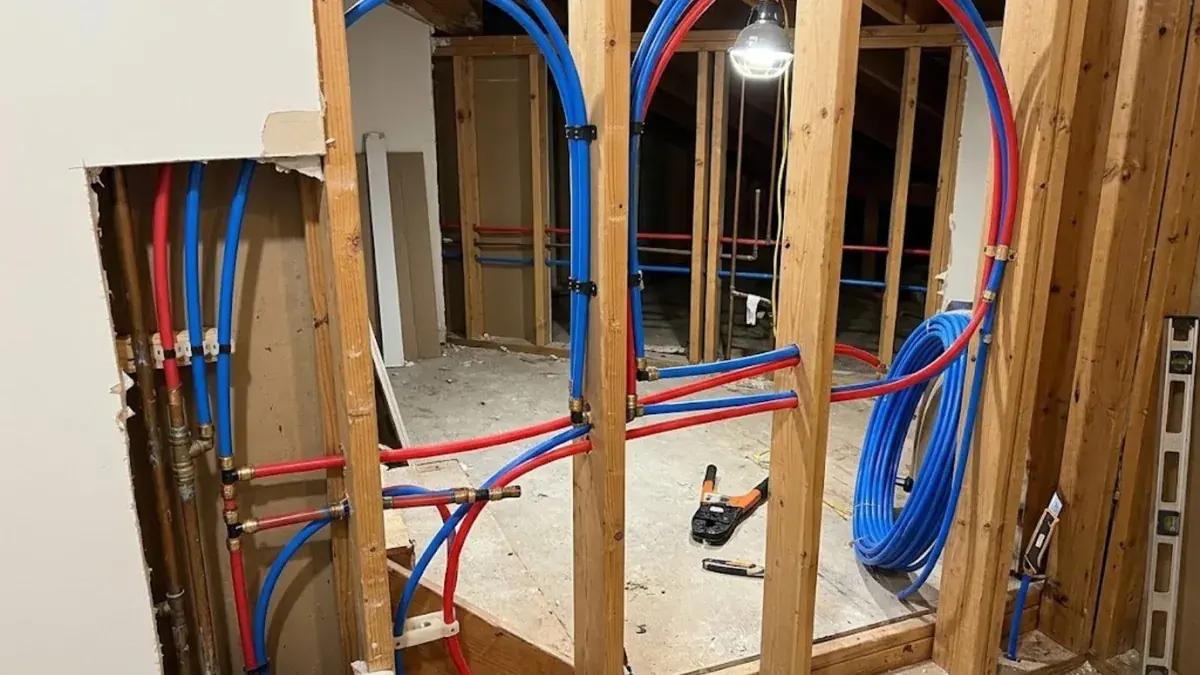
A repipe means access, and access means openings in walls and ceilings. In an older home, we use the basement and attic runs as much as we can, and we tell you where we must open a finished wall. We discuss patching, and what is included before the work starts.
Repiping in older Upper Darby housing
Older twins and rowhouses may have supply pipes of different ages in the same house, because additions and repairs added copper to galvanized runs over the years. Connecting different metals can cause corrosion at the joint. We use proper fittings and explain why.
If you are not sure what your pipes are, ask us to look. For a hidden leak without a full repipe, the leak detection page explains the tools, and for a street-to-house problem the water service line page covers it. If a burst has already happened, go to burst pipe repair.
What to expect after a repipe
New supply lines usually mean stronger and steadier water pressure, cleaner water from the tap and fewer leak calls. They do not change the drains, so a house with slow drains still needs drain cleaning or drain repair. We test every connection under pressure before closing access holes, and we explain what was patched and what was left for a finish contractor.
What repiping costs
We give a written price after a survey, because homes differ widely.
Insurance seldom pays for a planned repipe, though it may cover damage from a sudden burst. Check your policy. Want your real number? Call (215) 714-6692.
Sources: a repipe is a permit-level project in most cases under the Pennsylvania Uniform Construction Code (34 Pa. Code § 403.21, which brings in the International Plumbing Code, IPC), and only the licensed master plumber can apply for the plumbing permit under Upper Darby Township Code Chapter 265.
Questions homeowners ask
Low pressure at several fixtures, rusty water, repeated pinhole leaks and old galvanized pipe are the main signs. We inspect the pipes and tell you if a repipe is truly needed.
It depends on the size of the house and access. We give you a schedule in the written scope and keep water off for as short a time as possible each day.
We use basement and attic access where we can and tell you where openings are needed before work starts.
A planned repipe is scheduled, but if a pipe has burst we dispatch on the 24/7 line and treat the repipe as a follow-up.