Three common diverter types
| Type | How it looks | Repair |
|---|---|---|
| Spout diverter | A knob on top of the tub spout that you pull up | Replace the spout |
| Valve diverter | A third handle between two faucet handles | Replace the cartridge or stem |
| Single-handle with diverter | Handle that pulls or pushes, or a lever on the spout | Depends on the valve brand |
The spout type is the simplest and the most common problem. A small seal inside the spout wears, and the knob no longer holds the water up to the shower. Replacement spouts are widely sold, and most are installed with a set screw or by turning the spout onto the pipe.
Replacing a spout diverter
- Look under the spout for a small hex screw. If there is one, loosen it with a hex key and pull the spout off.
- If there is no screw, grip the spout with a rag and turn it counterclockwise to unscrew it from the pipe.
- Measure the pipe or check whether it is a slip-on or a threaded connection and buy a matching spout.
- Wrap threaded pipe with plumber's tape, install the new spout and tighten it by hand and a quarter turn.
- Caulk the gap against the wall with a bead of tub caulk and let it cure before using the shower.
If the pipe is corroded or the threads are stripped, stop. Forcing it can snap the pipe inside the wall, which turns a small repair into a bigger job.
Diverters inside the valve
In a three-handle setup, the middle handle controls a diverter stem. The washer or seat can wear, and the stem can be replaced like a faucet stem. Single-handle valves put the diverter in the cartridge or in a separate unit, and the parts depend on the brand. Take a photo of the trim and the cartridge, and bring both when you buy parts.
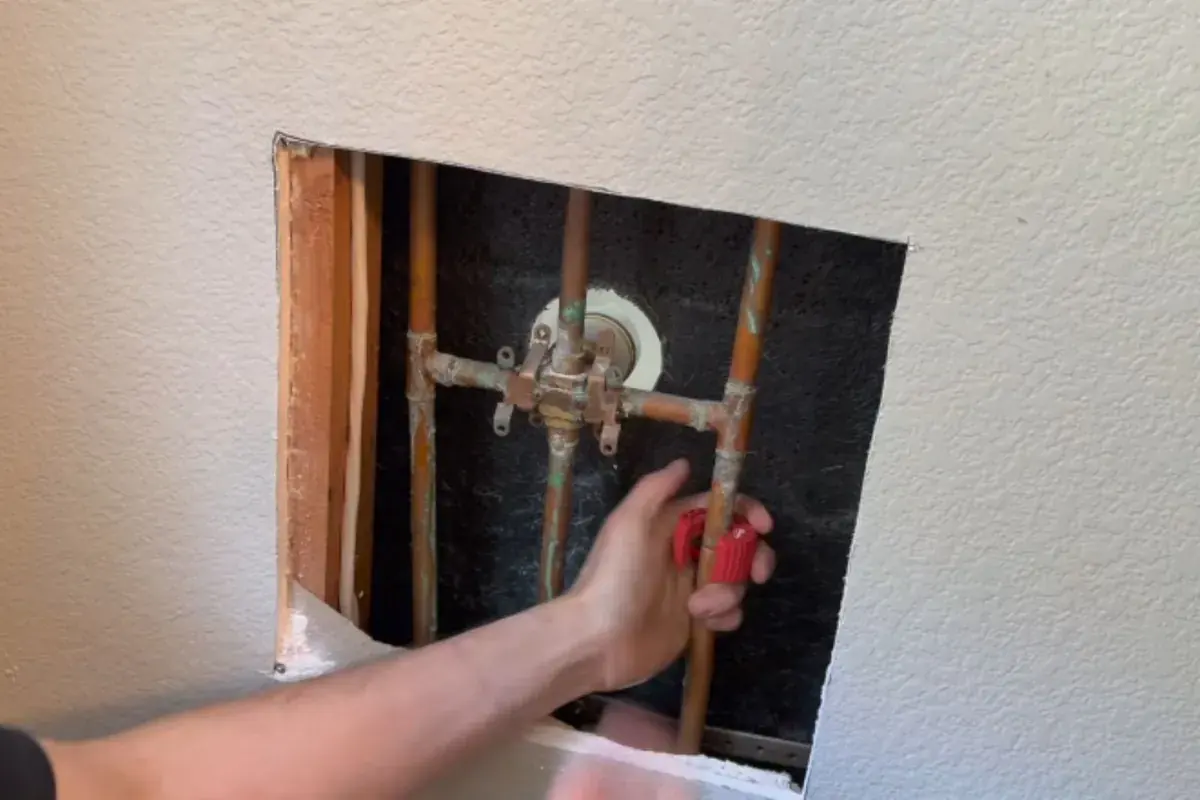
Access is the usual obstacle. Some valves can be reached from the front after removing the trim. Others need an opening behind the wall, which can be reached from a closet or the basement ceiling below. Our faucet repair page explains how we handle in-wall valves.
Signs the problem is bigger than the diverter
- The shower sprays weakly even when the diverter is fully engaged.
- Water seeps out of the wall around the handles.
- The ceiling below the bathroom is stained.
- The valve will not shut off completely.
Those point to a worn valve body or a leaking connection, not a diverter. If you see stains or soft drywall, leak detection can find where the water is coming from before anyone opens a wall.
Why diverters wear out
Every time you pull the knob, water pressure pushes the seal against its seat. Over years, soap residue and minerals build up and the rubber hardens. Hard water speeds that up. A diverter that has started to leak a little is telling you the seal is close to the end of its life, and replacing it early avoids a weak shower for months.
Leaving the diverter half engaged, or forcing it up when it sticks, damages the stem and the seal. Clean it with a soft brush and a mild descaler when it starts to stick, and replace it when cleaning no longer helps.
Tub or Shower Leaking?
Shut the bathroom stop or the main and call if water is in the wall. Our 24/7 line is open now.
Working on bathrooms in older Upper Darby homes
Upper Darby Township Code Chapter 265 says plumbing contractors working in the township must employ a licensed master plumber, and only the master plumber can apply for plumbing permits. Plumbing licenses in the township expire on March 31 each year.
Pennsylvania also requires contractors who do at least $5,000 a year in home improvement work to register with the Attorney General. You can look a contractor up at hicsearch.attorneygeneral.gov. Registration is not an endorsement, but it is a fair first check.
Upper Darby Township has adopted the Pennsylvania Uniform Construction Code. Replacing a diverter or spout is routine maintenance, but changing the valve or moving pipes is different, so ask the Department of Licenses and Inspection about permits for larger work.
Replace the whole valve when it makes sense
If the valve is decades old, parts are discontinued or you plan to retile, replacing the valve can be better than repairing it. That means opening the wall, so it is a plumber and tile job together. We explain the trade-offs on our plumbing installation page.
We serve Lansdowne and Clifton Heights close to Upper Darby, and you can read about them on our Lansdowne plumber and Clifton Heights plumber pages.
Tips before you start
- Shut the water off at the main or the stop for the bathroom first.
- Protect the tub with a towel so you do not chip the surface.
- Keep every old part in order so you can match replacements.
- Test the new diverter with the shower on before you caulk.
Sources: replacement parts must match the valve manufacturer's guidelines, and the International Plumbing Code (IPC) sets the rules for any valve replacement done for hire.
Questions Upper Darby homeowners ask
The diverter seal is worn. A small leak is common with age. A full flow from the spout means the diverter is not closing the path to the spout.
A spout diverter yes. A diverter inside the valve may need access from behind the wall unless it can be reached from the front.
A homeowner may do their own repair. Contractors hired to do plumbing in the township must employ a licensed master plumber.